
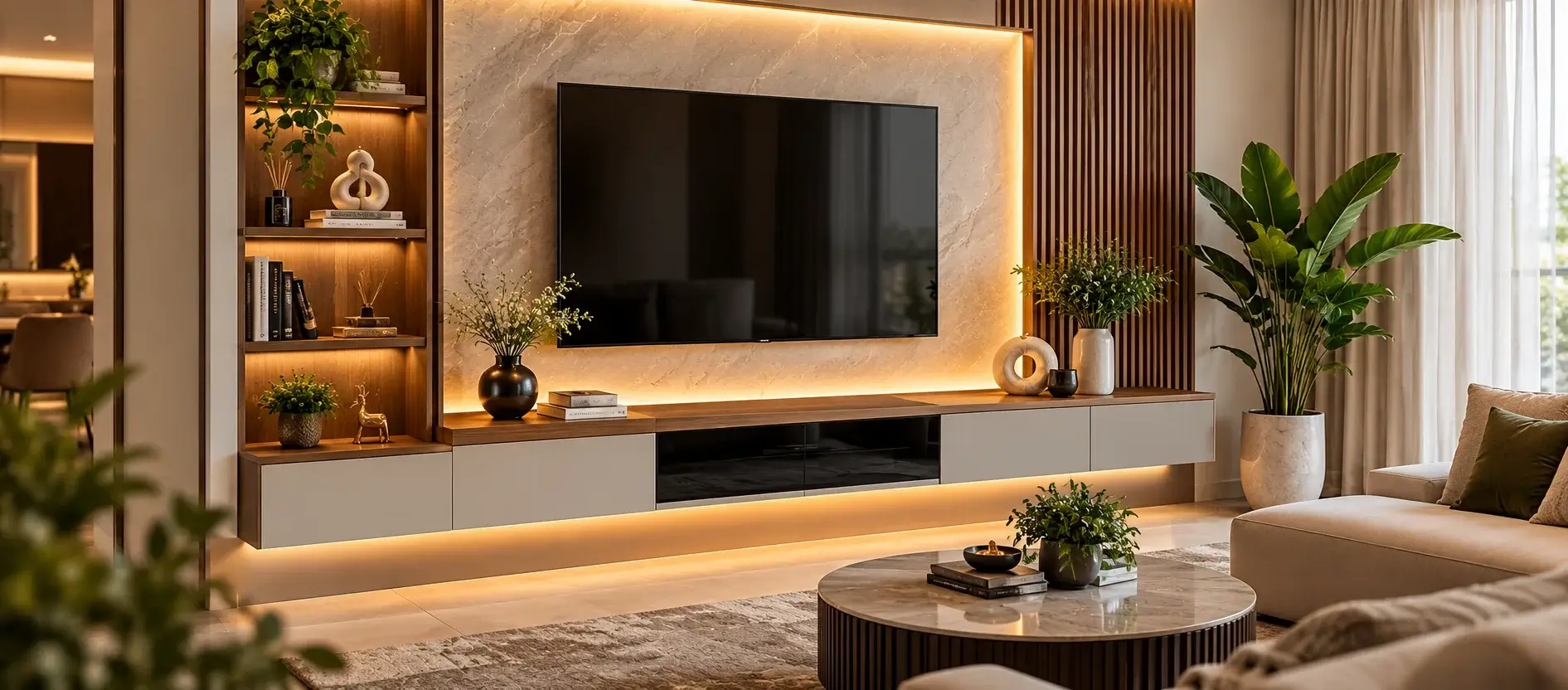
A well-designed living room TV unit turns your entertainment area into a stylish, organised and functional part of the home. Whether you like a minimalist floating cabinet, a contemporary wooden TV panel or a full entertainment wall with concealed storage, the right design suits your interiors and makes everyday living easier.
For homeowners in Delhi, Noida and Gurgaon, choosing a TV unit usually means balancing looks, wall space, storage and the overall interior theme. A well-planned unit can hold your television, set-top box, gaming console, speakers, decorative pieces and everyday storage without cluttering the room.
At Nexus Interio, we focus on practical, personalised living spaces. This guide covers 15 living room TV unit designs, selection tips, material options and answers to common questions, so you can plan your ideal entertainment area. Explore our interior design blog for more home design inspiration.
Quick Picks: Which TV Unit Suits Your Living Room?
| Quick Picks: Which TV Unit Suits Your Living Room? | |
|---|---|
| If Your Living Room Is | Recommended TV Unit |
| Small or compact | Floating TV unit with concealed storage |
| Large and spacious | Full-wall entertainment unit |
| Minimalist in style | Simple wall panel with a streamlined console |
| Warm and contemporary | Wooden TV unit or wooden slat panel |
| Premium and dramatic | Marble-look panel with integrated lighting |
| Also used as a workspace | TV unit with a built-in study area |
| An awkward wall layout | Custom-designed TV unit |
What Is the Best Living Room TV Unit Design?
The best living room TV unit fits your room dimensions, supports the television securely, offers enough storage and matches your interior style.
In a compact apartment, a floating TV unit with concealed storage keeps more of the floor visible. Larger living rooms suit a full-height TV wall unit with display shelves and cabinets. Minimalist interiors work well with a simple wall panel and a streamlined console, while contemporary luxury spaces can carry coordinated finishes, accent lighting and textured panels.
Before you choose a design, consider your television size, the available wall width, the viewing distance, cable management and the storage you actually need. You can explore more modern TV unit design ideas for additional inspiration.
15 Living Room TV Unit Designs for Modern Homes
1. Modern Floating TV Unit
A floating TV unit is fixed to the wall instead of resting on the floor. The floor beneath stays visible, which gives a streamlined look. It suits compact living rooms where bulky furniture would crowd the space, and it pairs well with a simple TV back panel and concealed compartments for remotes, routers and accessories.
Best for: Modern apartments in Delhi NCR, minimalist interiors, and anyone who likes a clean, uncluttered look.
Design tip: Check the wall’s strength and fixing requirements before choosing a wall-mounted cabinet.
2. Wooden TV Unit Design
A wooden TV unit adds warmth and texture. Natural wood finishes, walnut tones and oak-inspired surfaces go well with neutral walls, upholstered furniture and contemporary décor. Choose a simple wooden console for a subtle look, or combine wood-finish panels with closed cabinets for a more integrated design.
Best for: Contemporary, transitional and warm minimalist interiors.
Design tip: Compare construction, finish quality and maintenance needs before choosing a material for everyday use.
3. TV Unit with a Decorative Back Panel
A decorative back panel gives the television a defined focal point. Depending on the look you want, it can use wood-finish laminates, textured surfaces, stone-look finishes or coordinated wall panels. For textured decorative surfaces, explore PU wall paneling options that may complement a contemporary TV feature wall.
Best for: Living rooms that need a clear focal wall.
Design tip: Plan cable openings and power points before installation so the finished panel stays neat. In a smaller room, a simple finish with limited contrast looks more balanced.
4. Full-Wall Entertainment Unit
A full-wall unit combines the TV area with cabinets, shelves and display sections. It creates a coordinated entertainment wall and makes good use of a large living room wall. Closed cabinets can hold everyday essentials, while selected open shelves show books, photographs or decorative pieces.
Best for: Spacious living rooms and homes that need integrated storage.
Design tip: Do not fill every section with accessories. A balanced mix of open and closed storage keeps the unit looking organised.
5. Minimalist TV Unit Design
A minimalist TV unit uses clean lines, simple finishes and little decoration. It keeps to the essentials: the television, a compact console and discreet cable management.
Best for: Small living rooms, contemporary apartments and anyone who prefers understated interiors.
Design tip: Stick to neutral shades such as white, beige, light grey and natural wood, and use handleless cabinets and concealed storage to reduce visual clutter.
6. TV Unit with Storage Cabinets
Closed cabinets are ideal when you need space for routers, remotes, gaming accessories, cables, board games and other household items. The layout can use drawers, hinged cabinets or a mix of both.
Best for: Family living rooms where organisation is a priority.
Design tip: List what you plan to store and estimate the space it needs before finalising. Keep frequently used devices easy to reach, and never enclose equipment that needs ventilation without adequate airflow.
7. TV Unit with Open Display Shelves
Open shelves hold books, framed photographs, plants and collectibles, and they make a TV unit feel lighter than one built entirely from closed cabinetry.
Best for: Homeowners who want to personalise their living room décor.
Design tip: Keep the display selective, because too many objects make the wall look crowded. Combine open shelves with a closed lower cabinet to balance display and practical storage.
8. Marble-Look TV Unit Design
A marble-look TV panel brings an elegant, refined look without covering the whole wall in a heavy decorative material. White or beige stone-inspired finishes suit neutral furniture, while darker patterns create a more dramatic focal point.
Best for: Contemporary premium interiors and sophisticated living rooms.
Design tip: Choose the material based on installation method, maintenance, budget and room design, and make sure it coordinates with the floor, lighting and other surfaces.
9. TV Unit with Wooden Slat Panels
Wooden slat panels add texture and visual rhythm behind the television. Paired with a simple floating console, they make a modern feature wall.
Best for: Contemporary homes that want a distinctive TV wall without excessive decoration.
Design tip: Use the slat pattern selectively so it does not overwhelm a compact room, and plan cable access, TV mounting and lighting before the panel goes in.
10. Compact TV Unit for Small Living Rooms
A compact unit makes efficient use of limited wall space. A narrow console, wall-mounted shelves and concealed cable routing give you the essentials without taking over the room. Light finishes and simple lines keep the space feeling open.
Best for: Apartments, compact living rooms and smaller entertainment areas in Delhi, Noida and Gurgaon.
Design tip: Size the unit in proportion to the television, and skip extra side cabinets if they obstruct movement.
11. TV Unit with Integrated Lighting
Integrated LED lighting can highlight a back panel, display niche or floating cabinet. Soft, indirect light adds depth and sets a different mood in the evening.
Best for: Modern interiors with accent lighting and coordinated finishes.
Design tip: Make sure the lighting supports the room’s main illumination and does not cause glare on the screen. Plan the wiring, power supply and maintenance access before installation.
12. Two-Tone TV Unit Design
A two-tone unit combines two complementary finishes, such as white and wood, beige and walnut, or grey and oak. The contrast defines different sections of the unit without elaborate detailing. Use one finish for the main cabinet and another for the back panel or selected shelves.
Best for: Contemporary homes that want more character without a busy design.
Design tip: In a small living room, use lighter base colours with restrained contrast to keep the look balanced.
13. TV Unit with a Study or Work Area
If your living room does double duty, the TV wall can include a compact desk or study section. This works well in apartments without a separate home office.
Best for: Compact urban homes and multifunctional living rooms.
Design tip: Plan the television, storage and work area together to avoid overcrowding the wall, and allow for desk depth, chair clearance, lighting and cable access.
14. Floor-Standing TV Console
A floor-standing console sits directly on the floor and can offer generous storage through drawers, shelves or enclosed cabinets. Depending on its size and build, it is easier to reposition than a permanently wall-mounted cabinet.
Best for: Homeowners who prefer conventional furniture, flexible arrangements or plenty of storage.
Design tip: Keep it from blocking walking paths or making the TV wall feel heavy, and check that it supports your television and equipment according to the manufacturer’s specifications.
15. Custom-Designed TV Unit
A custom unit is planned around your room dimensions, television size, storage needs and interior theme. It can combine floating cabinets, decorative panels, concealed wiring, display niches and coordinated finishes in one design. It is especially useful when the TV wall has unusual dimensions, existing electrical points, windows, doors or other constraints.
Best for: Homeowners who want a coordinated design made to fit their living room.
Design tip: Finalise the layout, material specifications, hardware, lighting, ventilation and cable access before installation begins.
How to Choose the Right TV Unit for Your Living Room
Choosing the right design takes more than picking a style from a photograph. The unit has to fit the space, work with your television and suit the way your household uses the room.
1. Measure the TV Wall
Measure the wall’s width and height, and note any doors, windows, switches or sockets. Measure the television and its stand or mounting requirements too. The unit should look in proportion to both the screen and the surrounding furniture. An oversized unit dominates a small room, while an undersized console looks unbalanced under a large television.
2. Consider Your Living Room Size
The floor area available should shape the unit’s depth, height and storage layout. Smaller rooms suit floating consoles and streamlined panels. Larger rooms can take more extensive storage or a full entertainment wall, as long as there is still comfortable room to move.
3. Select Suitable Materials
Common options include engineered wood, plywood-based cabinetry, solid wood, laminates and decorative surface finishes. Performance depends on construction quality, installation, finish and upkeep, so compare intended use, budget, appearance and care requirements before you choose.
4. Plan Storage Around Your Needs
Think about what the unit has to hold:
- Set-top boxes and streaming devices
- Routers and internet equipment
- Gaming consoles and accessories
- Remotes, chargers and cables
- Books, photographs and decorative objects
- Other living room essentials
Choose the right mix of open shelves, drawers and closed cabinets instead of adding storage you will rarely use.
5. Plan Cable Management
Visible wires make even an attractive unit look unfinished. Plan cable openings, concealed routing, socket placement and access for future device changes before installation. Have electrical work done by a qualified professional, and make sure cables can be inspected or replaced without dismantling the whole unit.
6. Maintain Comfortable Viewing
The television should sit where it is comfortable to watch from the main seating area. Consider the sofa position, viewing distance, screen size and mounting height, and avoid mounting the screen so high that viewers keep tilting their heads up. The right arrangement depends on the room and your viewing setup, not one universal mounting height.
7. Coordinate Colours and Finishes
The TV unit should work with the sofa, flooring, wall colour, curtains and other furniture. Popular combinations include:
- White and natural wood: a bright, contemporary look
- Walnut and beige: a warm, sophisticated appearance
- Grey and white: a clean, understated interior
- Wood with black accents: a modern contrast
- Neutral finishes with textured panels: subtle visual interest
Stick to a coordinated palette instead of using too many contrasting finishes on one wall. For a coordinated home interior, you can also explore modular wardrobe solutions that complement your living room’s materials and finishes.
Living Room TV Unit Ideas for Delhi, Noida and Gurgaon
Homeowners across Delhi NCR can adapt TV unit designs to their property layouts, storage needs and interior preferences.
TV Unit Designs for Delhi Homes
In compact urban homes and renovated living rooms, floating consoles, streamlined wooden panels and concealed storage keep the look balanced. In larger living rooms, an integrated entertainment wall adds storage and a more defined focal point. If you are planning a broader home renovation, explore these interior planning ideas for Delhi NCR homes.
TV Unit Designs for Noida Apartments
Many apartment layouts reward careful space planning. A compact wall-mounted unit, light finishes and limited open shelving keep the entertainment area organised without using up floor space. Where you need more storage, combine a streamlined panel with a practical lower cabinet.
TV Unit Designs for Gurgaon Homes
Contemporary interiors can bring together coordinated wooden finishes, decorative panels, integrated lighting and concealed cabinetry. The right combination depends on the wall dimensions, the home’s overall design and how much storage you need.
These are general design recommendations, not fixed regional preferences. Your room layout, budget and personal taste should decide the final choice.
Common Mistakes to Avoid When Designing a TV Unit
Avoid these mistakes when planning your entertainment wall:
- Choosing a unit without measuring the television and the available wall space.
- Selecting an oversized design that restricts movement.
- Ignoring cable access and electrical socket placement.
- Enclosing heat-generating devices without enough ventilation.
- Using too many decorative elements on a small TV wall.
- Failing to coordinate the unit’s finish with the rest of the living room.
- Mounting the television without checking wall strength and fixing requirements.
- Ignoring access for cleaning, maintenance or future equipment changes.
A well-planned TV unit looks attractive and stays practical for everyday use.
Why Consider Nexus Interio for Living Room Interior Planning?
A TV unit works best when it complements the wider living room design instead of standing alone as a piece of furniture. Its proportions, colours, storage and lighting should coordinate with the sofa, wall finishes, flooring and circulation space.
Nexus Interio offers interior design solutions with a focus on functional design and coordinated home spaces. Homeowners in Delhi, Noida and Gurgaon can explore our work and discuss their interior requirements with the team. Learn more about Nexus Interio’s approach to interior design.
Planning a new living room or renovating an existing one? Define your TV wall dimensions, storage needs, preferred materials and design style before you finalise the layout.
Ready to plan your TV wall? Contact the Nexus Interio design team to discuss your requirements and explore suitable interior solutions.
Frequently Asked Questions About Living Room TV Units
1. Which TV unit design is best for a living room?
It depends on room size, television dimensions, storage needs and interior style. Floating units suit compact rooms, while full-wall entertainment units work well in larger spaces that need integrated storage.
2. Which TV unit is best for a small living room?
A compact floating TV unit with concealed storage is often the most practical choice. It keeps the floor visible and holds your essential devices without making the room feel crowded.
3. What material is best for a living room TV unit?
The right material depends on your budget, design preferences, construction quality and maintenance needs. Compare the specifications of engineered wood, plywood-based cabinetry, solid wood and decorative finishes before you decide.
4. Should a TV unit be wall-mounted or floor-standing?
A wall-mounted unit gives a streamlined look and keeps the floor visible. A floor-standing unit may offer more storage and is easier to reposition. The right choice depends on the wall structure, room layout and household needs.
5. How wide should a TV unit be?
The right width depends on the television, wall dimensions and surrounding furniture. Measure the screen and the available wall before choosing, and make sure the finished unit looks in proportion to the room.
6. How can I hide wires behind my TV unit?
Plan cable openings, concealed channels and accessible power connections during installation. Keep the arrangement ready for future device changes, and have the electrical work done safely by a qualified professional.
7. Which TV unit colour is best for a modern living room?
White, beige, grey, walnut and natural wood finishes are all versatile. The best colour depends on the room’s lighting, flooring, sofa, wall colour and interior style.
8. Are custom TV units worth considering?
Yes, when standard furniture does not fit your wall or you need a specific mix of storage, decorative panels, lighting and cable management. The value depends on the design, materials, workmanship and project budget.
9. Can a TV unit include storage and display shelves?
Yes. A TV unit can combine closed cabinets for concealed storage with open shelves for books, photographs and selected decorative objects. Balance the two to suit the room size and avoid clutter.
10. Where can I explore living room TV unit and interior design solutions in Delhi NCR?
You can visit Nexus Interio to explore interior solutions and discuss your living room design requirements for homes in Delhi, Noida and Gurgaon.
Final Thoughts
The right living room TV unit brings together style, storage and function in a well-organised entertainment area. From floating consoles and wooden panels to full-wall entertainment units and custom designs, there is an option for every room size and interior style.
Before you finalise a design, measure the wall, consider your television and connected devices, plan cable management, choose suitable materials and coordinate the unit with the rest of the living room.
For homeowners in Delhi, Noida and Gurgaon, Nexus Interio is a good starting point for contemporary interior solutions. Review our interior design process to understand how to plan your project.
